
Pretend Play Toys India: The Best Toys for Imagination, Language and Real-World Learning
Looking for the best pretend play toys in India? This guide explains why pretend play matters, which toys support it best, and how to build a better role-play setup without buying too much.
Pretend play is one of the most powerful forms of childhood learning. When children act out stories, imitate daily life, and invent roles, they are doing much more than playing. They are building language, emotional understanding, sequencing, confidence, and creativity.
That is exactly why searches for pretend play toys in India are so valuable. Parents are not just looking for entertainment. They are looking for toys that help children think, express, and imagine more deeply.
Quick takeaways
- Pretend play strengthens imagination, language, and social understanding.
- The best pretend play toys invite children to create stories rather than follow a script.
- Role-play toys often become more valuable when rotated instead of piled up.
- Toyflix helps parents access high-quality pretend play toys without overbuying.
Why pretend play matters so much
Pretend play helps children practice the world before they fully understand it. A child pretending to cook, drive, teach, doctor, or run a shop is exploring language, memory, sequence, and social roles all at once.
That kind of play also supports emotional development. It gives children a way to process routines, observations, and feelings through action and repetition.
What makes a good pretend play toy
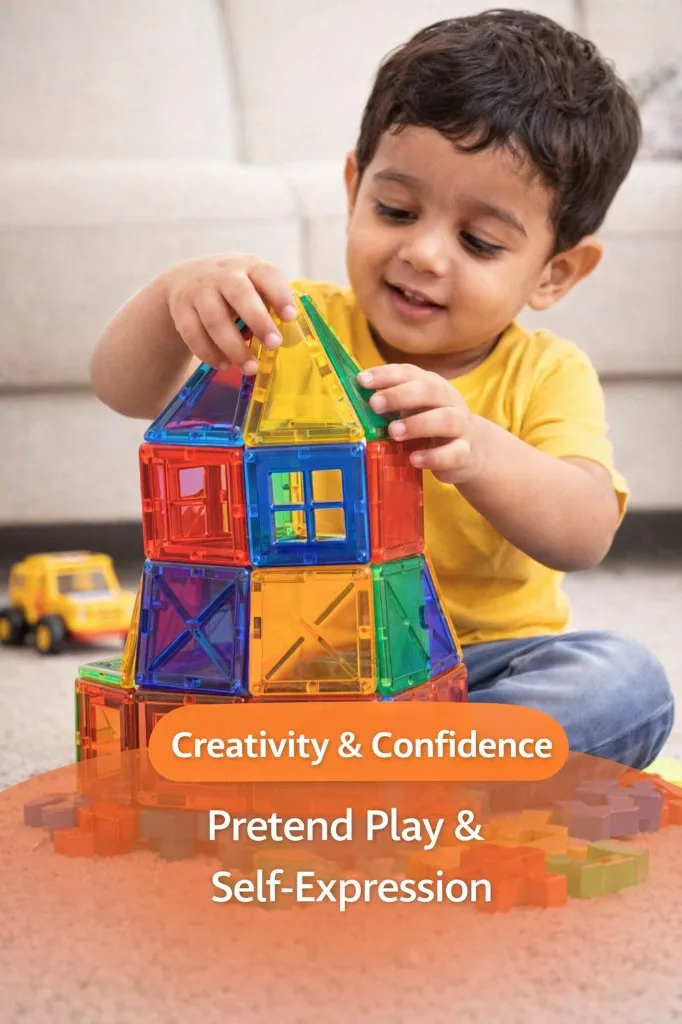
The best pretend play toys are open enough to let children invent their own scenarios. Good examples include kitchen sets, tea sets, doll accessories, doctor kits, tool benches, cash registers, housekeeping toys, vehicles, and modular building toys that can become houses, shops, or castles.
A strong pretend play toy does not need to be complicated. It needs to invite stories.
How pretend play helps language and confidence
When children explain what they are doing, assign roles, repeat phrases, and narrate their own stories, language grows naturally. That makes pretend play especially useful for children in the toddler and preschool years.
It also builds confidence because the child is making decisions, setting the rules, and practicing how to handle everyday situations in a safe way.
Why parents should avoid toy overload here too
Pretend play works best when children can focus on a few strong role-play cues instead of being surrounded by too many options at once. A kitchen set plus a few accessories can be more effective than a crowded shelf of unrelated toys.
Rotation keeps imagination fresh. It also helps parents see which kinds of stories and setups their child naturally gravitates toward.
How Toyflix fits imaginative play at home
Toyflix helps families explore premium pretend play options without permanently buying every role-play setup. That is especially useful when a child is cycling through different interests and developmental phases.
Instead of overcommitting to one expensive toy category, parents can rotate thoughtfully and keep imaginative play alive without creating long-term clutter.
FAQs
What are pretend play toys?
Pretend play toys are toys that encourage children to act out roles, stories, routines, and imaginary situations such as cooking, doctor play, shopping, or building a make-believe world.
Why are pretend play toys important?
They support imagination, language, confidence, emotional expression, and social understanding in a very natural and engaging way.
What age is best for pretend play toys?
Pretend play usually becomes especially rich in the toddler and preschool years, though many children begin role-based imitation even earlier.
See the real thing
Stop reading about toys. Go and pick some.
Hundreds of premium branded toys, matched to your child's age and swapped when they outgrow them. Free delivery across Bangalore, no deposit, no damage charges.
Browse all toysOr jump straight to