
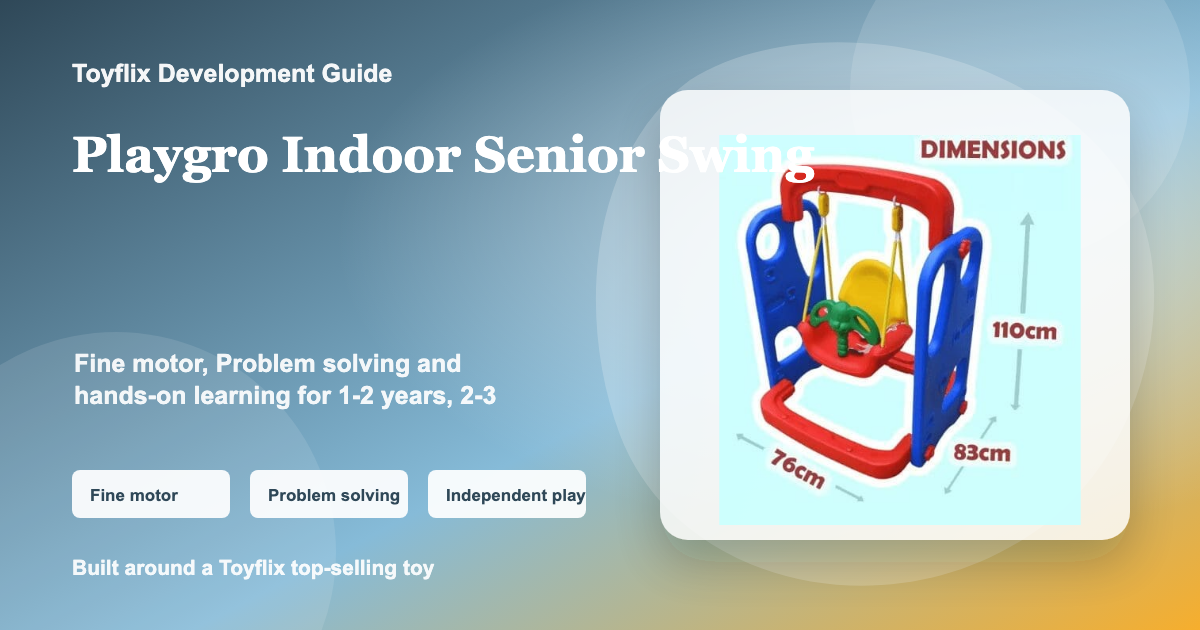
Playgro Indoor Senior Swing: What This Top-Selling Toy Builds in Early Development
The indoor swing gives children calming vestibular input while building body awareness, posture and trust in movement.
A swing is one of the clearest examples of play affecting the nervous system. Some children become calmer after rhythmic swinging; others become more alert and ready to engage.
The Playgro Indoor Senior Swing is valuable because it gives that movement input in a controlled home setting, where parents can watch what kind of rhythm their child responds to best.
Quick takeaways
- Supports vestibular processing, posture, body awareness and emotional regulation.
- Slow rhythmic swinging can help some children settle before books, meals or quiet play.
- The parent’s observation matters: the right speed is the one that keeps the child organised, not overstimulated.
Why swinging feels so powerful to children
Swinging gives the brain repeated information about movement, gravity and balance. Children have to adjust their trunk, head and gaze while the body moves through space.
That repeated sensory input can help a child feel more settled in their body. It is not magic; it is rhythm, prediction and safe movement working together.
How to read your child’s response
A regulated child usually looks relaxed, makes eye contact, smiles, hums or asks for “again” without becoming frantic. An overstimulated child may get wild, upset or unable to transition away.
Use short rounds and pause often. The pause teaches children to notice their own body rather than chase more and more speed.
Play ideas beyond just swinging
Try song swings, where each push matches a line of a rhyme. Try “freeze swing”, where the swing stops and the child names a colour in the room. For older toddlers, ask them to predict whether the next push will be small or big.
These tiny games add language, anticipation and self-control to the sensory play.
Why renting works well for swings
Indoor swings need space and safe setup, and not every child uses them for the same length of time. Some children crave swinging for weeks; others move quickly to climbing or pretend play.
A rental model lets families discover whether swinging is the right input for their child without committing to long-term storage.
FAQs
What skill does an indoor swing build?
It supports vestibular processing, core control, posture, rhythm, body awareness and calm transitions.
Can swinging help with calm learning?
For some children, slow rhythmic swinging before quiet play can help them organise their body and attention.
How long should a child swing?
Short supervised sessions are best. Watch the child’s mood and body cues, and pause before they become overstimulated.
See the real thing
Stop reading about toys. Go and pick some.
Hundreds of premium branded toys, matched to your child's age and swapped when they outgrow them. Free delivery across Bangalore, no deposit, no damage charges.
Browse all toysOr jump straight to