
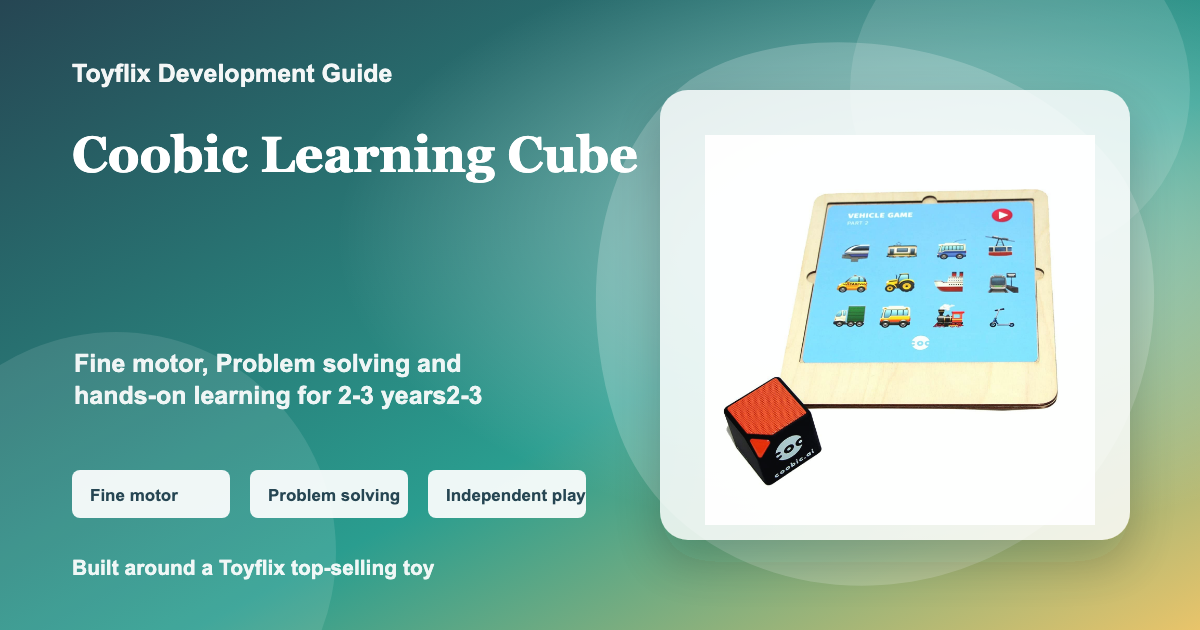
Coobic Learning Cube: What This Top-Selling Toy Builds in Early Development
Coobic Learning Cube supports fine motor control, problem solving, colour matching and focused independent play.
Coobic Learning Cube is the kind of toy that rewards slow hands and curious thinking. Children turn, match, push, sort and test ideas in a compact play space.
That makes it a strong contrast to big movement toys. It helps children practise concentration, finger control and problem solving without needing a large setup.
Quick takeaways
- Builds fine motor control, matching, problem solving, attention and independent play.
- Best used when parents allow children time to test instead of correcting too quickly.
- A useful quiet-play rotation after active toys like slides, scooters or ride-ons.
Fine motor learning happens through small attempts
Buttons, shapes, latches or cube activities ask children to use fingers precisely. They have to slow down, adjust grip and try a different angle when something does not work.
That frustration is productive when it stays manageable. The cube gives children small problems they can solve with their own hands.
Problem solving without pressure
Instead of saying “do it this way”, parents can narrate what the child is trying: “You turned it”, “That side opened”, “This one needs a push”. That kind of language keeps the child thinking.
The goal is not speed. It is attention, curiosity and the confidence to try one more strategy.
How to use it across ages
Younger toddlers may explore one side at a time. Older children can sort by colour, follow two-step instructions, or explain what each side does.
This flexibility is why activity cubes can stay interesting across a wider age band, as long as parents keep changing the challenge.
Why rotate quiet skill toys too
Even compact toys lose freshness if they sit out every day. Rotation makes the cube feel new again and helps parents pair it with the child’s current skill need.
Toyflix lets families alternate between fine-motor toys, pretend play and active movement without overfilling shelves.
FAQs
What does Coobic Learning Cube develop?
It supports fine motor skills, attention, matching, problem solving, persistence and independent play.
How should parents guide cube play?
Offer one prompt at a time, narrate what the child is doing, and allow trial and error before helping.
Is this better after active play?
Often yes. Some children focus better on quiet fine-motor play after their body has had movement time.
See the real thing
Stop reading about toys. Go and pick some.
Hundreds of premium branded toys, matched to your child's age and swapped when they outgrow them. Free delivery across Bangalore, no deposit, no damage charges.
Browse all toysOr jump straight to